Different formats, different routines
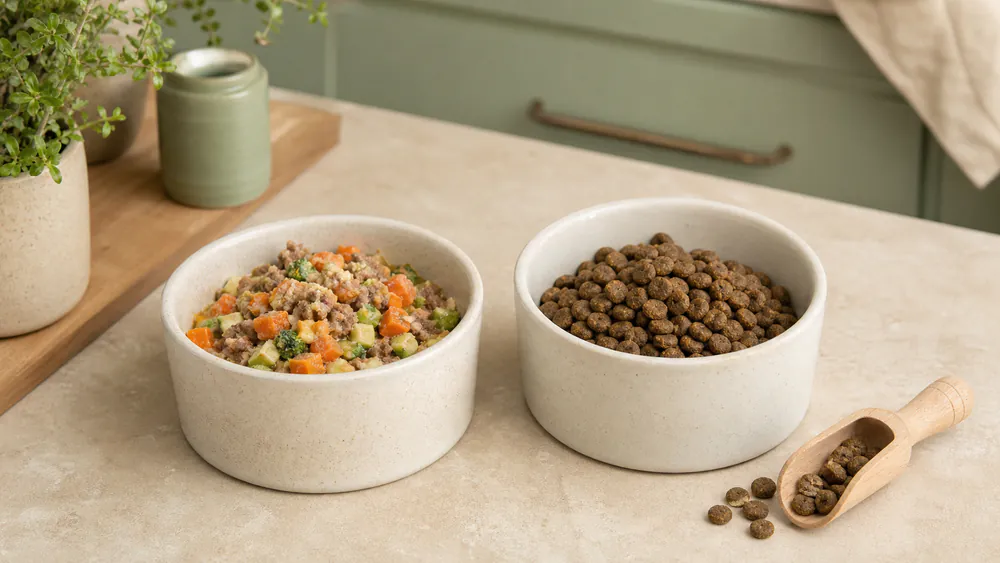
Wet and dry food have different storage, serving and packaging characteristics. Neither format is automatically right for every dog or household, so compare the practical details as well as the label information.
Storage and serving
Dry food may be easier to store in larger quantities, while wet food may need different handling after opening. Follow the current instructions for the specific product, including any advice about resealing, refrigeration and use-by times.
Portioning and mixed feeding
If a routine includes more than one format, calculate the overall plan carefully using relevant feeding guidance. Avoid adding extra food without considering the day as a whole.
Compare the exact products
Wet and dry are broad labels. Two wet foods may have different storage instructions, while two dry foods can have different portion guidance. Compare the particular products that you are considering, including how much will be stored, how they are measured and whether anyone else needs to prepare meals.
If a household uses a mixed routine, keep the information for each food together and review the full day rather than treating each bowl in isolation. Current label or provider guidance is more useful than a general conversion guessed from an unrelated product.
Make a format comparison at home
Before changing format, ask practical questions about the current routine. Is there enough space to store the food correctly? Can everyone who feeds the dog use the same portioning method? Will the food be practical for travel, boarding or a pet sitter? These questions can matter more day to day than the broad label “wet” or “dry”.
If a food comes in several pack sizes, compare the amount that will be open at one time and the provider's instructions for handling it. For dry food, keep the original label or its current information with the storage container. For wet food, make a clear plan for unopened packs and for any food after opening, based on that exact product's instructions.
Keep changes easy to observe
Do not introduce a new format alongside several new treats, toppers or meal times. If a change is appropriate, follow the current guidance for the food and keep the rest of the routine as steady as practical. Record the product name, serving method and date of the change so there is a useful reference point later.
This approach does not establish whether a food is suitable for an individual dog. It simply avoids turning a practical format change into a confusing collection of variables.
Questions for a mixed-feeding routine
- Which product guidance applies to each food being served?
- How will the overall day's food be measured and recorded?
- Does each product have its own storage or handling requirements?
- Can another carer follow the routine without guessing?
Where a dog has a prescribed diet, diagnosed condition or persistent feeding concern, seek individual advice before changing the feeding format.
Choose a routine you can maintain
Consider travel, budget, household preferences and the dog’s individual circumstances. Where there are health or feeding concerns, get tailored advice instead of relying on a format comparison alone.
FAQ
Common questions
How should I use this guide?
Use it as a practical starting point, then check current provider or product information before making a decision.
Are the recommendations paid for?
Commercial relationships do not determine our editorial conclusions. Where affiliate links are used, we label them clearly.