Start with the routine, not a winner
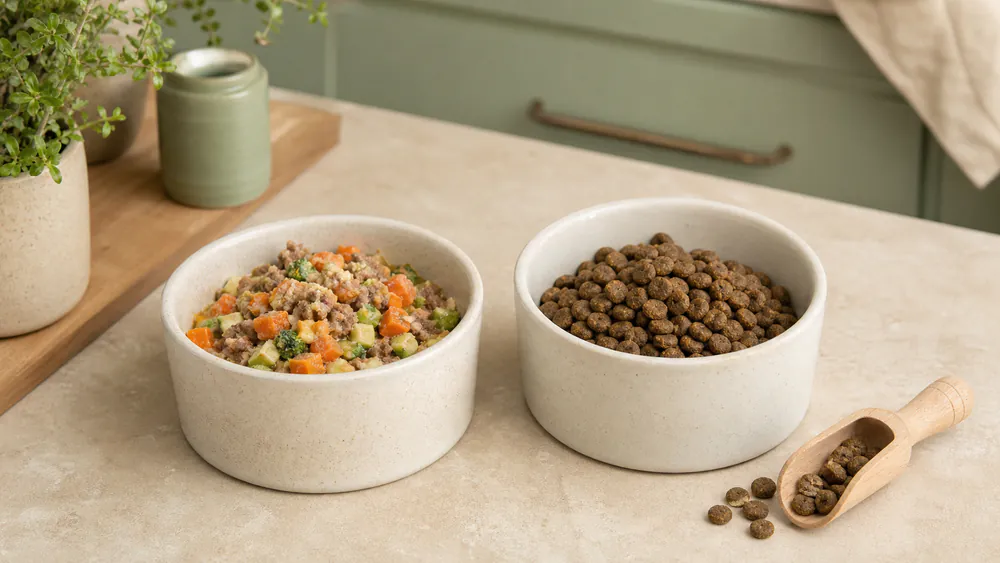
Fresh dog food and kibble are different formats with different practical demands. The useful question is not which format is always “best”, but which can be stored, served and monitored appropriately for an individual dog and household.
Storage and convenience
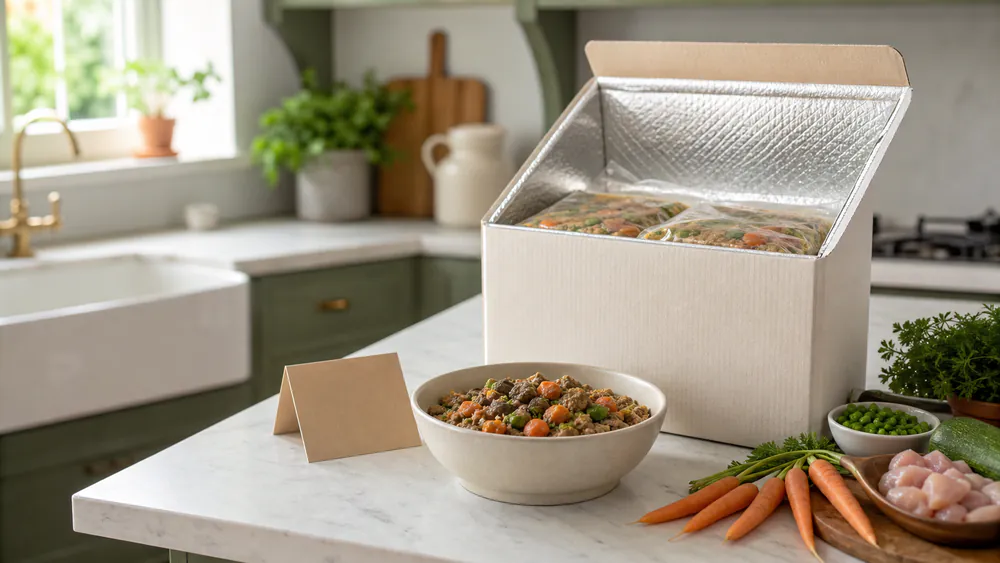
Kibble is commonly shelf-stable until opened, while fresh food may need chilling or freezing and more attention to delivery timing. Consider the space you have, how frequently you travel and whether everyone in the household can follow the same routine.
Portioning and cost questions
Both formats should be fed according to current label or provider guidance, with individual needs kept in mind. Compare the full ongoing cost, including delivery where relevant, rather than a single introductory offer or one bag’s headline price.
Ingredient information
Read the product information for the food in front of you. Look for clear feeding instructions and information relevant to your dog’s needs. Avoid assuming that a format alone tells you how a particular recipe will work for your dog.
Compare the routine side by side
The table below is not a scorecard. It is a way to identify which questions are most relevant to a household before changing food format.
| Area to compare | Fresh food | Kibble |
|---|---|---|
| Storage | May need fridge or freezer capacity and attention to delivery timing. | Usually shelf-stable before opening; follow the product's storage guidance. |
| Preparation | May involve defrosting, portioning or serving preparation. | Often simple to measure and serve, depending on the product. |
| Travel and handovers | Requires a plan for safe storage when away from home. | Can be easier to pack, but still needs consistent measuring. |
| Product information | Check the current recipe, feeding plan and delivery details. | Check the current label, feeding guide and pack instructions. |
Make the comparison specific
It is easy to compare an idealised version of one format with an inconvenient version of another. Instead, compare the two products that are genuinely being considered. Look at how much food is likely to be stored at one time, how portions are measured, whether other household members can follow the routine and what happens on a normal busy week.
Cost comparisons also work best when they include the full routine. A headline figure may not reflect delivery frequency, portion size, treats or other food used alongside meals. Check current provider information before ordering and avoid assuming that an introductory arrangement represents the long-term cost.
If you decide to change format
Plan the transition before the first meal. Read the instructions supplied with the product, keep the existing routine as steady as practical and note any changes in portions, treats or meal times. This is not a diagnostic method, but a simple written record can make the routine easier to discuss if an individual concern arises.
For dogs with a prescribed diet, ongoing health concerns, reduced appetite or persistent digestive symptoms, seek personalised advice before making a significant diet change. The best comparison is not simply fresh versus kibble; it is whether a specific plan is appropriate and manageable for the individual dog.
A practical conclusion
Either format can involve trade-offs. Fresh food may offer a subscription-led routine; kibble may fit storage and travel more easily. A gradual, well-observed transition is sensible if you change feeding approach.
FAQ
Common questions
How should I use this guide?
Use it as a practical starting point, then check current provider or product information before making a decision.
Are the recommendations paid for?
Commercial relationships do not determine our editorial conclusions. Where affiliate links are used, we label them clearly.