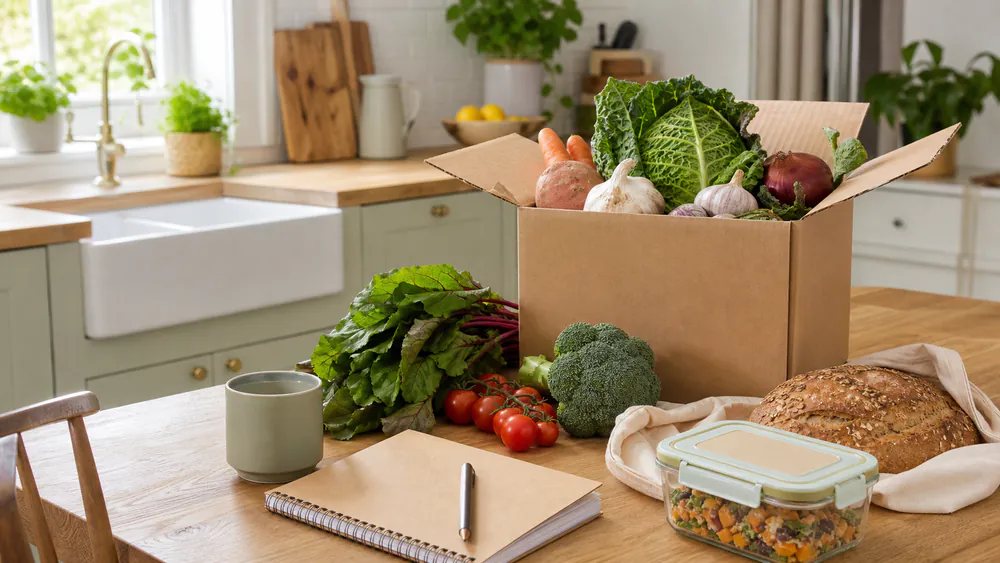
Look beyond the first order
An introductory price can be useful information, but it rarely explains the full cost or effort of using a subscription over time. Before ordering, look at the number of meals, delivery pattern, portion expectations and what happens when a household needs to skip a week. The provider's current checkout and terms pages are the best place to confirm the details that apply to the actual plan being considered.
The question is not whether a subscription is always good value. It is whether the full routine fits the household's budget, storage, schedule and food preferences without creating unnecessary waste or pressure.
Put the practical costs on one list
Use the same list for each service you are considering:
| Area | Question to check |
|---|---|
| Meal quantity | How many meals or portions will realistically be used? |
| Delivery | Is the timing, coverage and any delivery charge clear? |
| Flexibility | Can a delivery be paused, skipped or changed before it is prepared? |
| Storage | Will chilled, frozen or packaged food fit the available space? |
| Extra shopping | Will the service replace meals or still need to be supplemented? |
| Ongoing terms | What information should be checked again after any introductory period? |
Writing the answers down can be more useful than comparing a headline figure in isolation. It makes clear whether a plan may reduce meal decisions or simply add another delivery to manage.
Check the household rhythm
Subscriptions are usually easiest when they match the rhythm of the household. Consider travel, office days, shared meals, children, changing work patterns and how often the people eating together make last-minute changes. A plan that looks convenient on a quiet week may be less useful if meals are often missed or deliveries cannot be received easily.
Storage matters too. Check where the food will be kept before ordering a larger box. If meals need to be chilled or frozen, make sure the household can use them within the provider's current guidance and that another person could understand the arrangement if needed.
Avoid pressure-led decisions
Do not let urgency language replace a comparison. Prices, menus, terms and availability can change, and a time-limited promotion may not reveal the long-term routine. Take time to read the provider's own information, including cancellation or pause options, before entering payment details.
Where an article includes an affiliate link, that relationship should be disclosed clearly. A link may help support the publisher, but readers should still use current provider information and their own household needs to make the final decision.
Key takeaways
- Compare the full routine, not one introductory message.
- Include delivery, storage and flexibility in the decision.
- Check current provider terms before ordering.
- Choose a plan that fits the household's ordinary week, not only its best week.
FAQ
Common questions
How should I use this guide?
Use it as a practical starting point, then check current provider or product information before making a decision.
Are the recommendations paid for?
Commercial relationships do not determine our editorial conclusions. Where affiliate links are used, we label them clearly.