Begin with your actual week
Meal delivery can be convenient, but its value depends on how it fits your schedule. Consider delivery days, time available for preparation, the number of people eating and how often plans change.
Compare the ongoing experience
Check menu frequency, dietary filters, portion expectations, packaging, delivery coverage and account flexibility. Introductory promotions can be useful, but they should not be the only basis for a decision.
Look for clear information
Providers should publish current terms, delivery details and relevant food information. Verify those details directly before subscribing, particularly if a household has allergies or individual dietary requirements.
Check what happens after the first delivery
Before subscribing, look at how menu choices, skips, pauses and account changes work after an introductory period. A service can appear convenient at first but create waste or pressure if deliveries cannot be adjusted around travel, visitors or changing household plans.
It is also sensible to compare the full weekly routine: delivery cost, preparation time, storage space and any additional groceries needed. Provider information, prices and availability can change, so use the current service pages when making a decision.
Keep the decision practical
The best service for a household is often the one that can be used regularly without creating waste, unexpected cost or pressure around delivery timing.
Compare a normal week, not just the first box
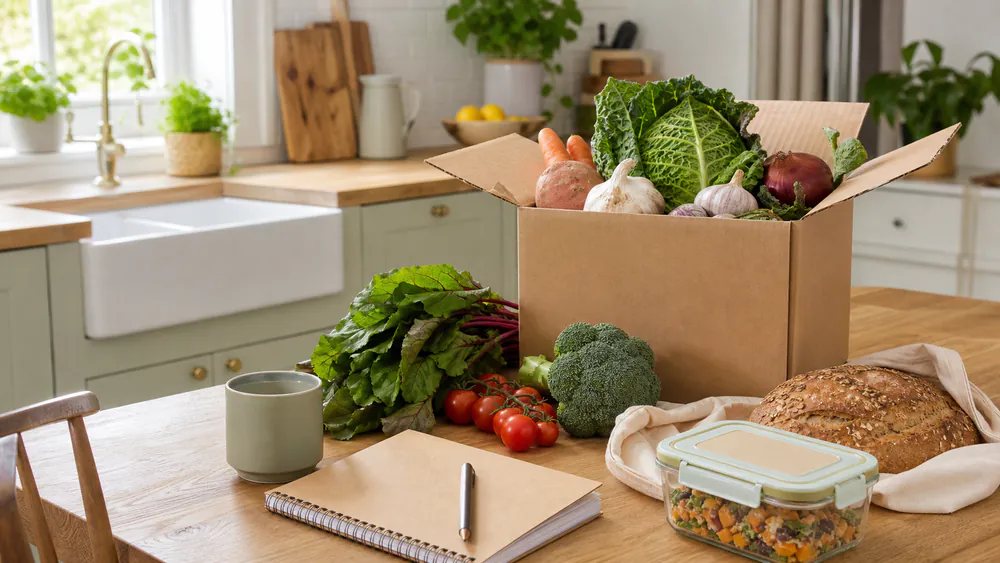
Before subscribing, write down an ordinary week: which evenings people are home, how many meals are genuinely needed, when a delivery can be received and how much space is available for ingredients. Then compare each service against that routine. This gives more useful information than a promotional headline because it includes the work, storage and flexibility involved after the initial order.
Look for the provider's current information about menu selection, skipping weeks, pausing, delivery coverage and changes to an account. These details can be more important than a first-order incentive, particularly for households with travel, shift work or unpredictable schedules.
Check the food information for the actual menu
If an allergy, dietary requirement or ingredient preference matters, use the provider's up-to-date menu and labelling information rather than assuming every recipe will be suitable. Confirm the preparation and storage instructions too. A meal delivery service can reduce planning work, but it does not remove the need to check the food a household will actually receive.
Keep external links and provider terms as the current source for availability, ingredients and price. An editorial guide can help organise the comparison, but it should not be treated as a live menu or a substitute for individual dietary advice.
A short pre-subscription checklist
- Can someone receive the delivery on the expected day?
- Is there enough fridge, freezer or cupboard space for the selected plan?
- Can menu choices, skips and pauses be managed without difficulty?
- Does the service provide current information for the recipes and dietary needs that matter to the household?
- Would the service still be useful after the introductory period ends?
FAQ
Common questions
How should I use this guide?
Use it as a practical starting point, then check current provider or product information before making a decision.
Are the recommendations paid for?
Commercial relationships do not determine our editorial conclusions. Where affiliate links are used, we label them clearly.