Use current puppy-specific guidance
Puppies grow quickly, so food selection and feeding amounts should be considered carefully. Check the current product information for the life stage it is intended for, and do not assume an adult-dog routine automatically applies.
Establish a repeatable routine
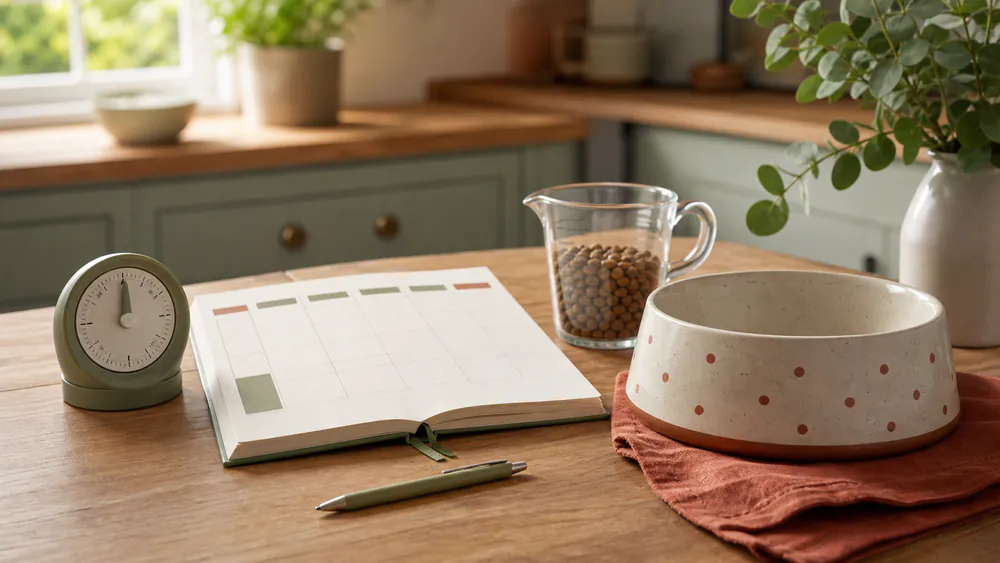
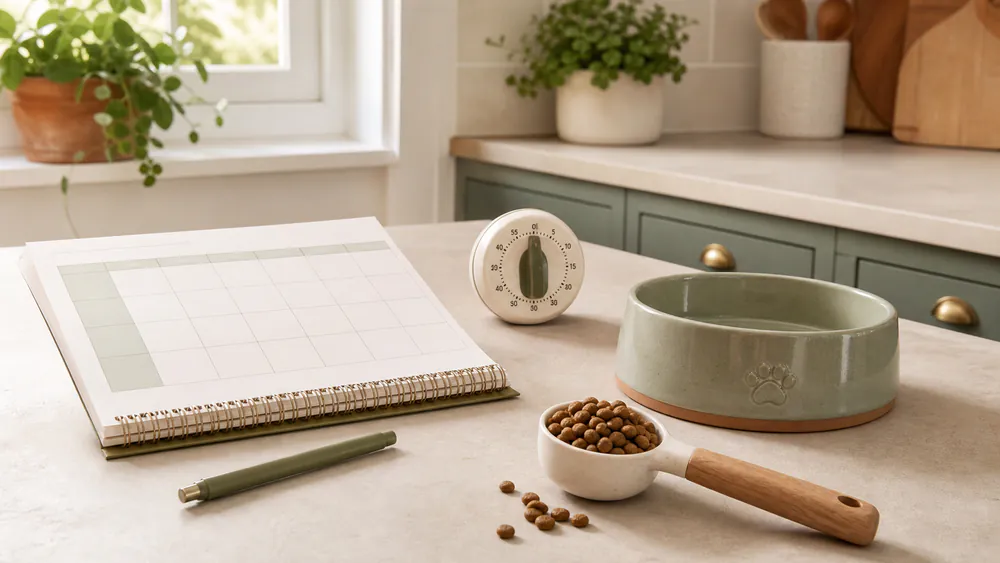
Set up clear feeding times, a consistent serving area and a simple way to track what is fed. This helps everyone in the household follow the same plan and makes it easier to notice changes.
Begin with the food and routine already known
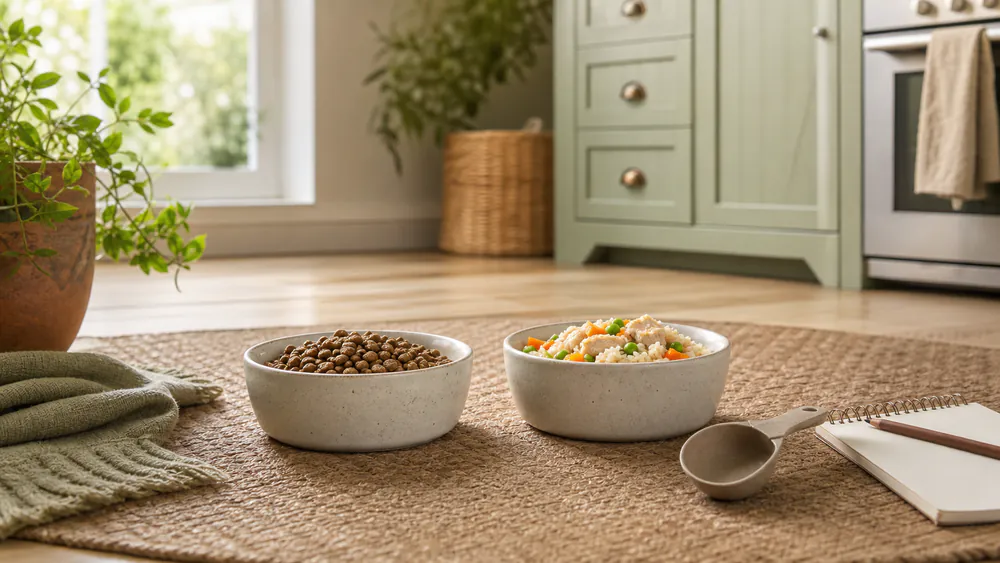
When a puppy first arrives, it is useful to know what food and routine they have been used to. A sudden change in home, people and schedule is already a lot to take in. If a change of food is planned, discuss the timing with an appropriate qualified professional where needed and follow the current transition information for the exact food. Keep notes of the product name, feeding guide and the date any change begins.
This is not a reason to keep the same routine forever. It is a way to make an intentional change rather than changing food, meal times and treats all at once. The clearer the starting point, the easier it is to explain the routine if advice is later needed.
Check that the food is intended for the puppy's stage
The label should state the life stage the food is intended for and whether it is complete or complementary. Do not assume that an adult product, a general brand page or a social-media recommendation applies to a growing puppy. Product ranges, portion guidance and the suitable stage can differ, so use the information supplied with the exact recipe or pack.
Large or giant breeds, puppies with a known condition and puppies whose growth is causing concern deserve individual support. A general guide can help a household organise questions, but it cannot prescribe a feeding plan for a particular puppy.
Keep transitions thoughtful
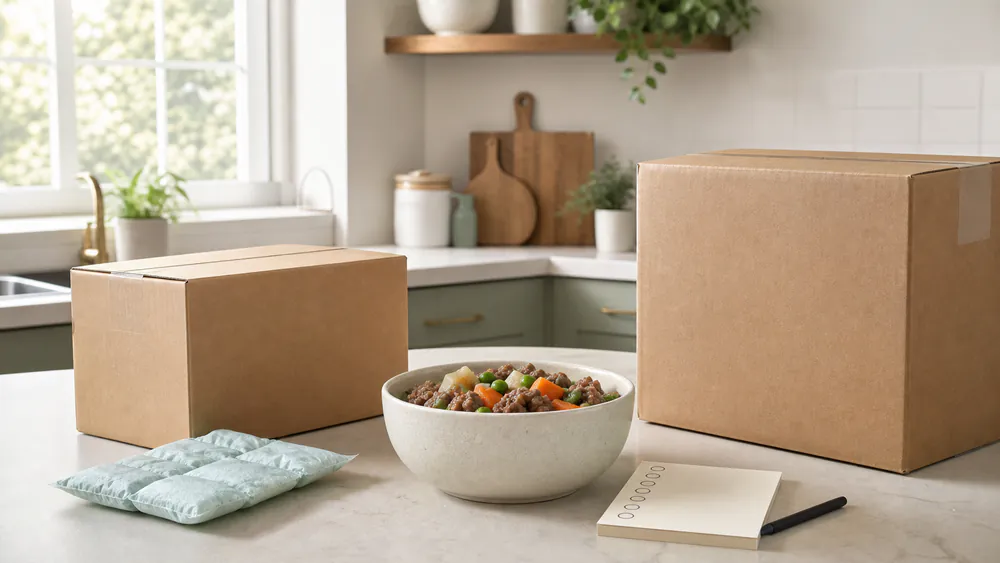
When moving between foods or feeding stages, use current provider guidance and allow time for the puppy to adjust. Individual questions about growth, appetite or feeding suitability deserve tailored professional advice.
Include the whole household
Puppy routines are easier to maintain when everyone uses the same information. Keep the current food, portion guidance, measuring method and feeding times in one accessible place. This is especially helpful if different family members share feeding or if a puppy is looked after by someone else for a short period.
Treats and training rewards are also part of the day's food routine. A simple plan makes it easier to see the whole picture without turning feeding into an overly complicated task.
Review as the routine changes
Growth, activity and food ranges can change over time, so revisit the exact product guidance rather than relying on an old note. Questions about growth, appetite, body condition or feeding suitability should be discussed with an appropriate qualified professional, who can consider the puppy's individual circumstances.
Make feeding information easy to share
Keep the current food instructions somewhere every regular carer can find them. A small note can include the product name, the current portioning method, meal times, treats used for training and any storage instructions. It is helpful to add the date the note was last checked, because puppies and products both change quickly.
When a puppy is with a sitter, at training or staying with family, explain the established routine instead of assuming that a different person will guess it correctly. A predictable routine can make the practical side of puppy care easier without treating food as a behaviour-management shortcut.
When to pause and get individual advice
Do not try to solve persistent appetite changes, digestive symptoms, rapid changes in body condition or a concern about growth by repeatedly switching products. Keep a factual record of the food, portions, treats and timing, then seek appropriate qualified advice. That information is more useful than an online product claim because it describes the puppy's actual routine.
A useful checklist
- Check the food’s stated life stage.
- Keep treats and extras in the overall routine.
- Discuss specific concerns with an appropriate qualified professional.
FAQ
Common questions
Is this guide personalised feeding advice?
No. It is general information to help you consider questions and options. A qualified professional can advise on individual needs.
Should I check current product details?
Yes. Ingredients, recipes, delivery areas and provider terms can change, so check the provider’s latest information before deciding.