Plan the change before opening the new food
Changing a dog’s food is easier when the new food, storage space and feeding routine are ready. Check the new product’s instructions and avoid making several major changes at once, such as switching food while changing exercise, treats and feeding times.
Use a gradual approach
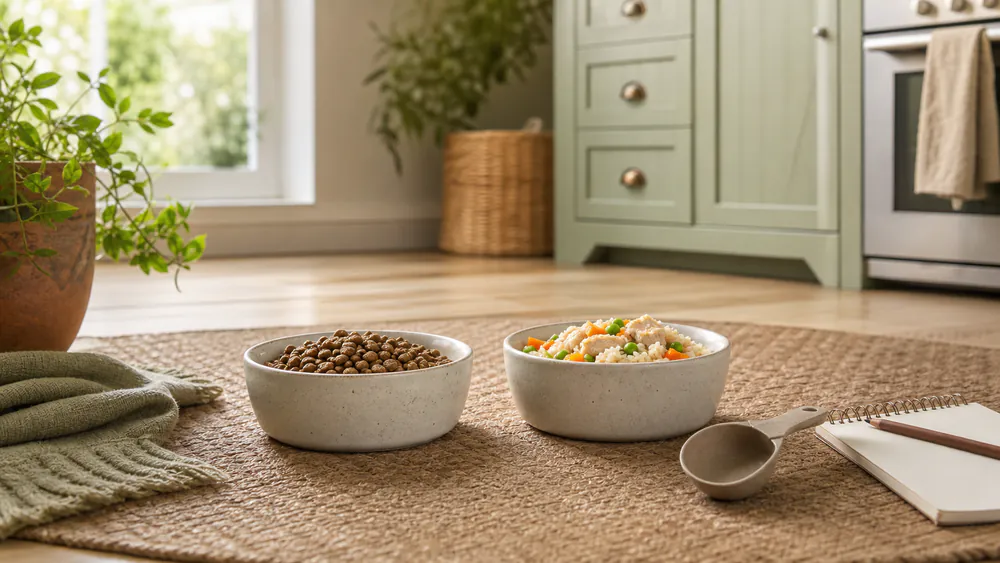
Providers commonly recommend introducing a new food in stages by mixing a small amount with the existing diet and increasing it over time. The right pace can vary, so use current product guidance and pay attention to how your dog responds rather than treating any timetable as a rule for every dog.
Keep the routine simple
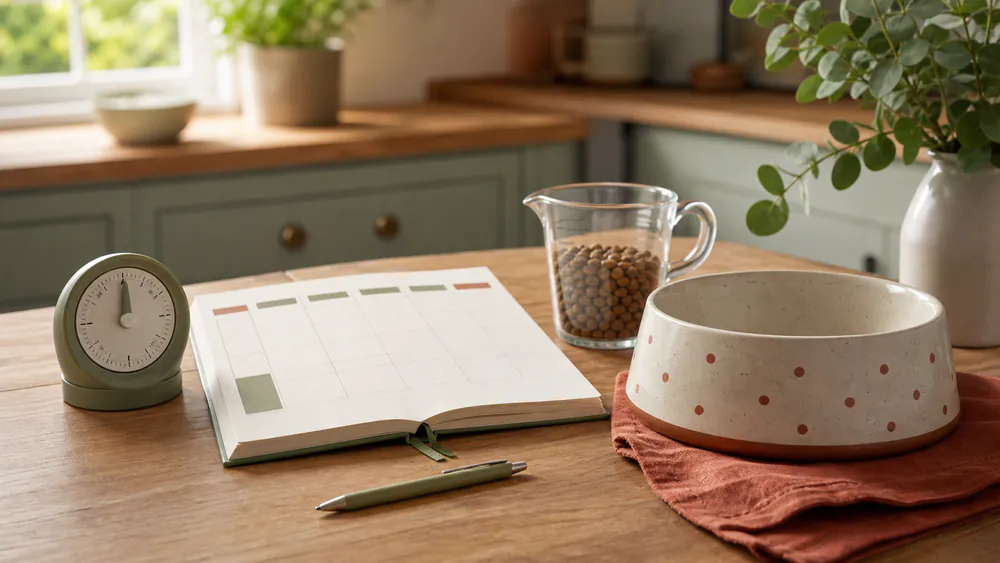
Serve meals at familiar times, make sure water is available and limit avoidable changes during the transition. A short note of portions, treats and observations can help you see whether something in the routine has changed.
When to seek advice
Do not rely on a general guide if a dog has ongoing digestive symptoms, reduced appetite, an underlying condition, a prescribed diet or any sudden change that worries you. An appropriate qualified professional can offer advice based on the dog’s individual circumstances.
Keep a short, factual transition note
A simple note can make a food change easier to manage. Record the date, the product being introduced, the approximate amount offered, meal times and any treats or extras fed that day. The aim is not to diagnose a problem from a notebook. It is to avoid relying on memory if the routine needs to be reviewed later.
Keep the note practical. If the household is busy, a few short entries are more useful than an elaborate chart that nobody maintains. The same record can also help another carer understand the current routine.
Avoid quick assumptions
Dogs can have changes in routine for many reasons, including travel, activity, treats, meal timing and food handling. If several things change at once, it can be difficult to understand what is influencing the routine. Where possible, introduce one new element at a time and follow the product's current guidance.
Do not use a generic schedule as a reason to push through a concern. If a dog seems unwell, refuses food, has persistent digestive symptoms or has an existing condition, seek appropriate individual advice. A review or guide cannot assess a dog's health or replace information from a professional who knows the situation.
Prepare storage and handovers
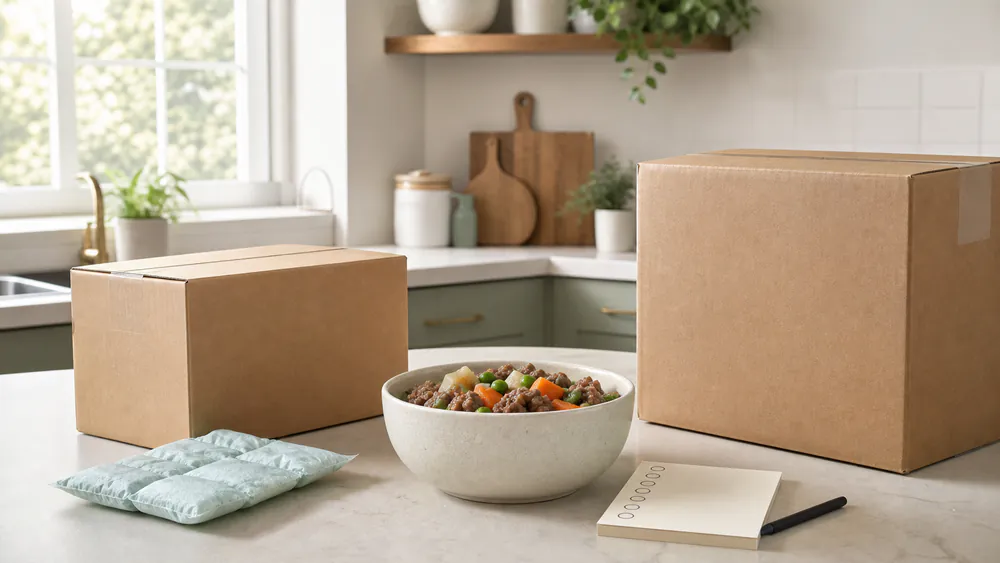
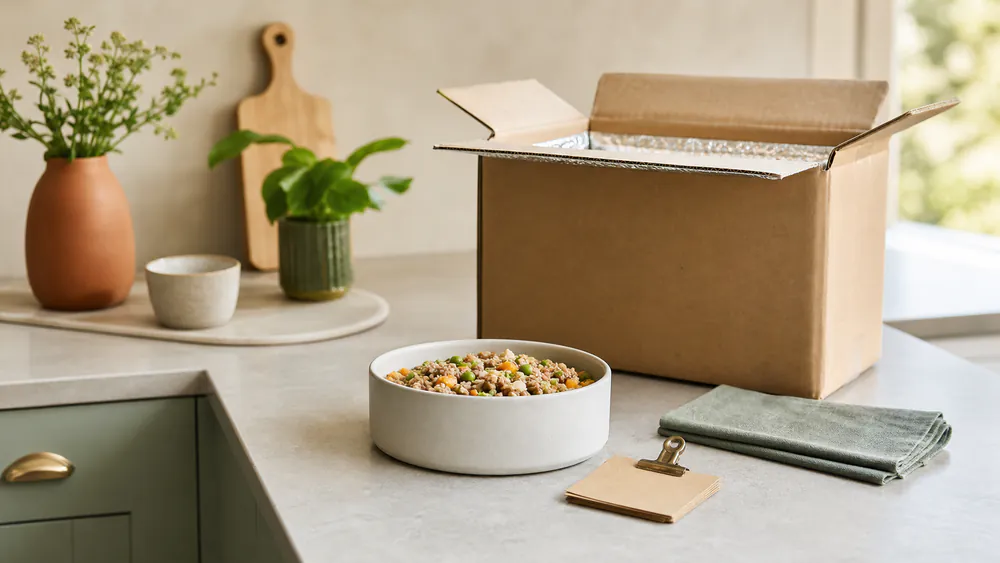
Before delivery or purchase, make sure the storage method is realistic for the household. Check fridge or freezer space, read handling information and agree who is responsible for meals. If a friend, family member or sitter may feed the dog, leave the current instructions in a clear place rather than expecting them to remember a verbal explanation.
A calm final check
At the end of a transition, review the everyday details: whether portions are easy to prepare, whether storage works and whether the routine is sustainable. The goal is not to reach a universal “perfect” food. It is to make an informed, manageable decision with current product information and individual support where required.
Key takeaways
- Check storage and instructions before beginning.
- Change one element at a time where possible.
- Use professional guidance for individual health or feeding concerns.
FAQ
Common questions
Is this guide personalised feeding advice?
No. It is general information to help you consider questions and options. A qualified professional can advise on individual needs.
Should I check current product details?
Yes. Ingredients, recipes, delivery areas and provider terms can change, so check the provider’s latest information before deciding.