Build around a routine you can keep
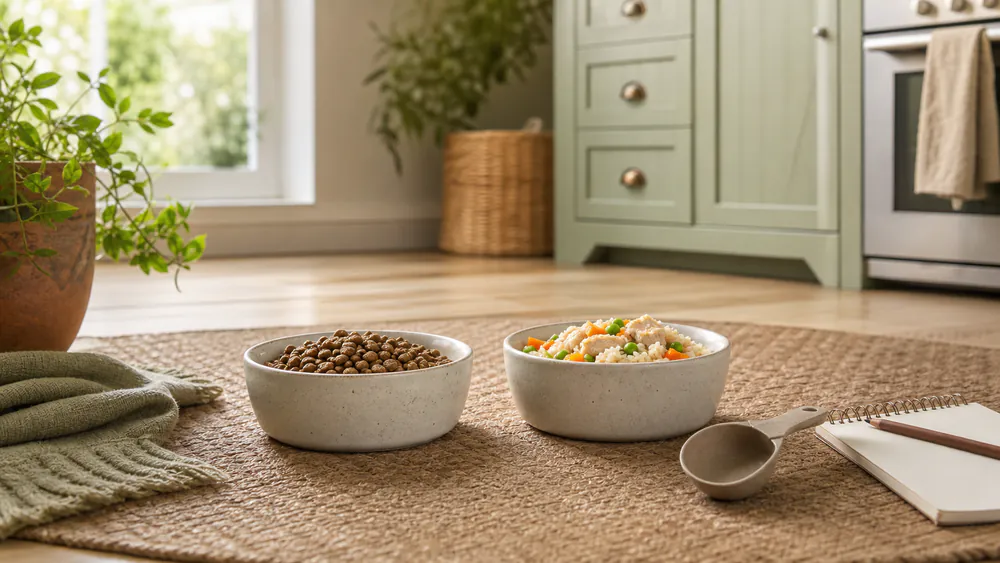
A feeding schedule works best when it fits the household. Choose meal times that can usually be maintained, allow enough time to prepare food safely and make it clear who is responsible for feeding.
Think about life stage and activity
Dogs at different life stages can have different needs, and activity may vary from day to day. Rather than copying a generic timetable, use current product guidance and seek individual advice for puppy feeding, senior dogs or health-related questions.
Prepare for exceptions
Travel, visitors and changes in work patterns happen. Keep storage instructions accessible, agree a simple handover note for other carers and avoid last-minute food changes if possible.
Make responsibilities clear
In many households, a schedule only becomes inconsistent when more than one person is involved. Agree who prepares meals, who checks that food has been served and where the current instructions are kept. A short note on the fridge or in a shared household list can be more effective than relying on memory, particularly during busy mornings or when someone is away.
Use a flexible framework, not a rigid promise
The goal of a schedule is consistency, not perfection. Some days will include travel, visitors or changes to work hours. Build in a simple response for those days: know where food is stored, keep any necessary measuring tools together and avoid making sudden food changes simply because the routine is busy.
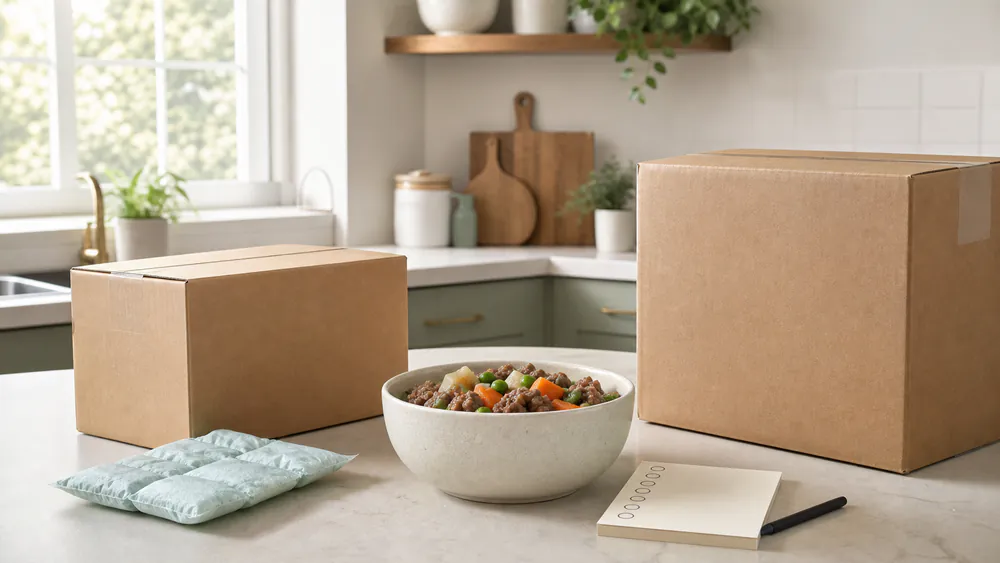
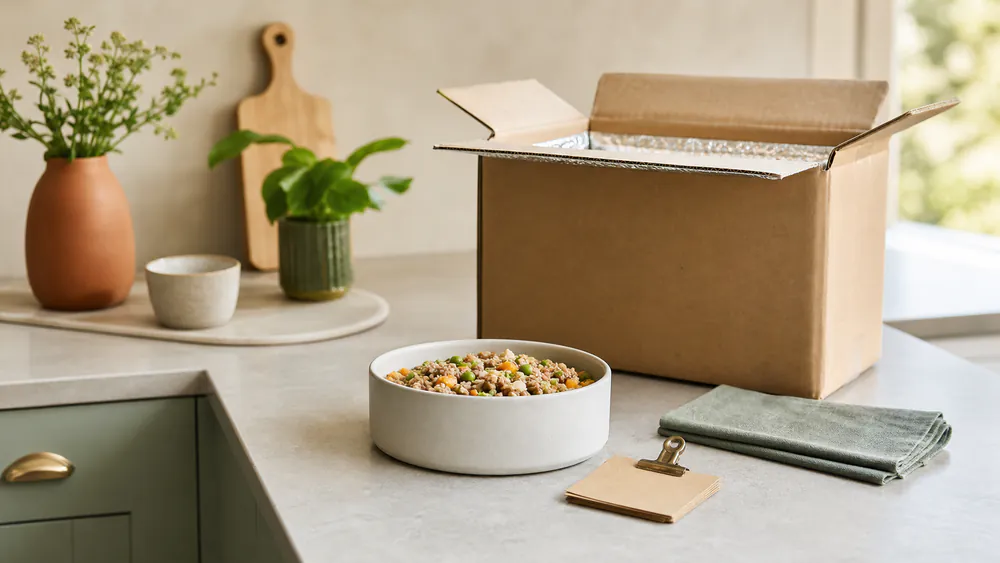
For food that needs chilling or freezing, include storage and defrosting in the schedule. The plan should cover the whole process from delivery to serving, rather than treating meal time as the only task.
Review a schedule after a routine changes
Revisit the plan when a dog moves life stage, a household changes its timetable or a new food is introduced. Check the product's current guidance and keep treats or complementary food in view. If there is a concern about feeding, appetite or an individual health issue, a qualified professional can help tailor advice to the dog rather than relying on a generic timetable.
Keep observations useful
If you monitor a new schedule, note practical facts such as meal times, portions and treats. This can be useful context if you later need to discuss feeding with a qualified professional.
Start with a simple daily template
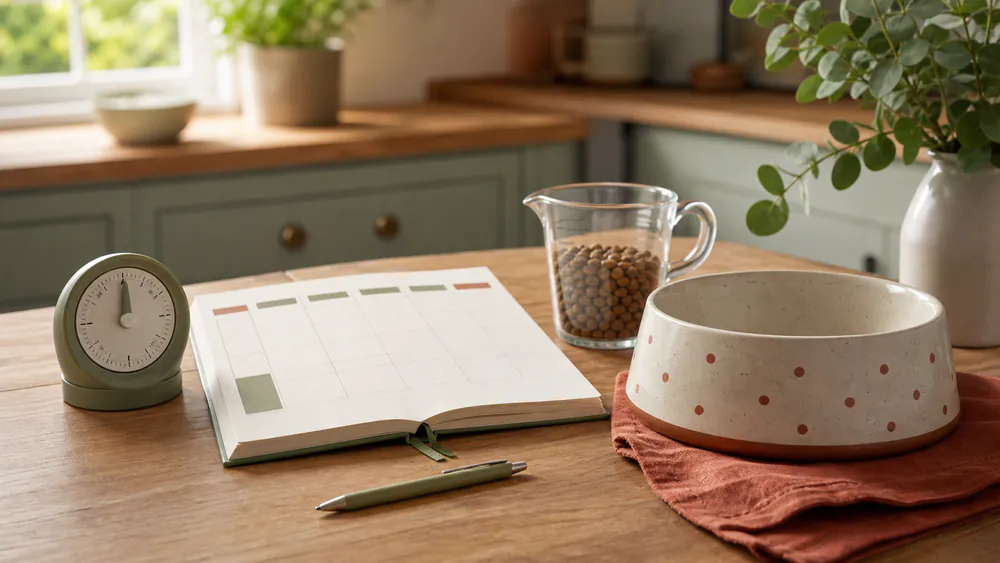
Begin with a version that works on an ordinary weekday. Note the usual first meal, the usual later meal or meals, who is normally at home, and when food needs to be taken from storage. The schedule should also show where water, food, serving tools and the latest product guidance are kept. A short, visible plan is easier to follow than a detailed timetable stored in someone's phone.
Avoid presenting a fixed clock time as the only correct approach. The useful feature is a routine that the household can apply consistently while respecting the product instructions and the dog's individual circumstances. If a working day changes, update the plan rather than quietly abandoning it.
Include rewards and activities in the plan
Food may also be used for training, enrichment or medication routines. Record these practical details so they are not invisible beside the main meals. If exercise, school runs or visitors make a particular time difficult, decide in advance who will feed the dog and where the food will be kept.
This is a planning exercise, not a claim that every dog should follow the same pattern. Puppies, older dogs, dogs on a prescribed diet and dogs with feeding concerns may need advice tailored to them.
A calm handover for another carer
When another person looks after the dog, share the exact food, portioning method, current serving routine and any provider storage instructions. A photo of the label or a written note can be more reliable than a verbal reminder. Ask the carer not to introduce new treats or food simply because the household is away, unless that has been agreed with appropriate individual advice.
After the handover, return to the established routine where practical. Keeping the same food and instructions reduces unnecessary variables, especially if a dog is already settling into a recent change.
FAQ
Common questions
Is this guide personalised feeding advice?
No. It is general information to help you consider questions and options. A qualified professional can advise on individual needs.
Should I check current product details?
Yes. Ingredients, recipes, delivery areas and provider terms can change, so check the provider’s latest information before deciding.