Start with serving context
Nutrition labels are most useful when you understand the serving information shown. Compare like with like where possible and remember that the amount you eat may differ from the suggested serving.
Use labels as one source of information
Ingredients, allergen statements, storage instructions and preparation guidance can all provide useful context. A label supports everyday choices, but it cannot replace individual advice for medical, allergy or dietary questions.
Compare without chasing perfection
Looking at a few similar products can help you understand differences, but there is rarely a single number that determines whether a food belongs in a balanced routine. Consider taste, access, budget and how the food is actually used.
Read labels in a useful order
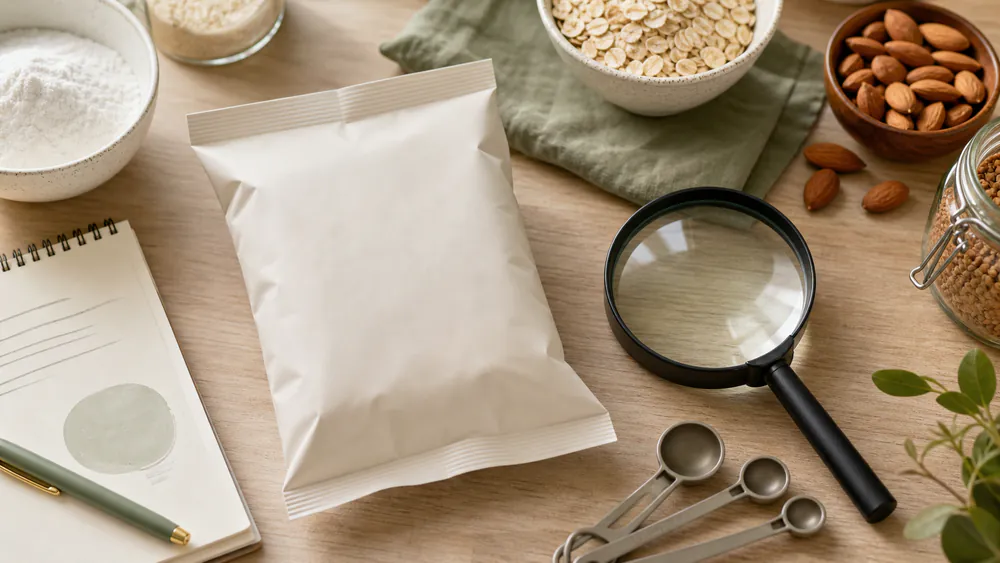
Begin with the pack size and serving information, then check the values you want to compare in the same context. Look at ingredients and allergen information if they are relevant to the decision, and check storage or preparation instructions before buying a product that will be used frequently.
Labels work best as a practical comparison tool, not as a test of whether one food is “good” or “bad”. Keep the wider routine in view, including how often the food is used, what it is eaten with and whether it fits the household's budget and preferences.
Keep questions individual
For personalised nutrition advice or a health-related concern, speak to an appropriate qualified professional.
Compare like with like
The clearest comparison is usually between similar products in the same serving context. A figure per 100g can be useful for comparing packs, while a per-serving figure can be useful for understanding how the food may fit into a meal. Neither number is a universal verdict. Check which basis is being used before deciding that one item is higher or lower than another.
It is also worth checking the pack size. A label may present several servings in one package, and a household may naturally use more or less than the suggested amount. Reading the serving information first makes the rest of the label easier to interpret.
Build a repeatable shop comparison
When comparing products you buy regularly, choose two or three details that genuinely matter to the household. That might be allergen information, fibre, salt, added sugar, storage, price per use or preparation time. Keep the comparison short enough to use in a supermarket aisle or online basket.
Avoid treating one number as a shortcut for the whole decision. A product can be useful because it is affordable, available, enjoyable and practical to prepare, even if another product has a more eye-catching label. A workable food routine comes from patterns over time, not one isolated purchase.
Check the ingredient list with a purpose
Ingredient and allergen information is most valuable when it answers a concrete question. If there is an allergy, a dietary requirement or a medical concern, use the current pack as the reference and seek appropriate individual advice instead of relying on a general guide. Products and recipes can change, so an old photograph or an online review may not match the pack in hand.
FAQ
Common questions
How should I use this guide?
Use it as a practical starting point, then check current provider or product information before making a decision.
Are the recommendations paid for?
Commercial relationships do not determine our editorial conclusions. Where affiliate links are used, we label them clearly.