Use guidance as a starting point
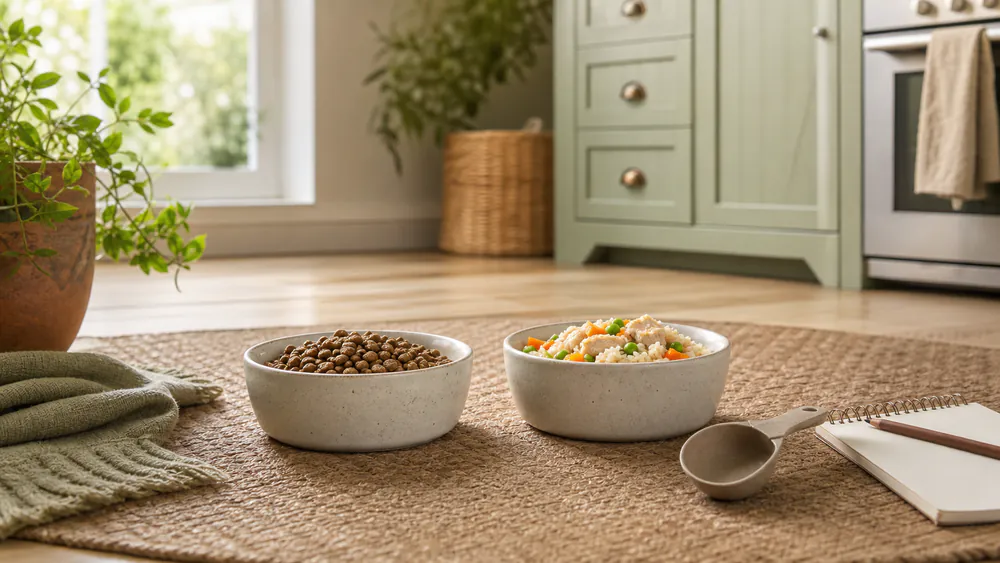
Food labels and providers may publish suggested portions, but a feeding amount is not one-size-fits-all. Age, body size, activity, body condition, treats and other food can all affect a dog’s overall routine.
Measure consistently
Use the measuring method supplied with the food, or weigh portions if the provider’s guidance is given by weight. Consistency makes it easier to understand what is actually being fed and to spot changes in a routine.
Consider the whole day
Meals are not the only source of food. Training treats, chews, table scraps and food from other household members can all matter. Keep those additions in mind when reviewing a routine rather than looking only at the main bowl.
Start with the exact product instructions
The most relevant portion guidance is the guidance for the food that is actually being fed. Different recipes can vary in format and serving information, so an old chart, a social-media post or a generic online calculation may not match the current product. Check the label or provider guidance each time a food is changed.
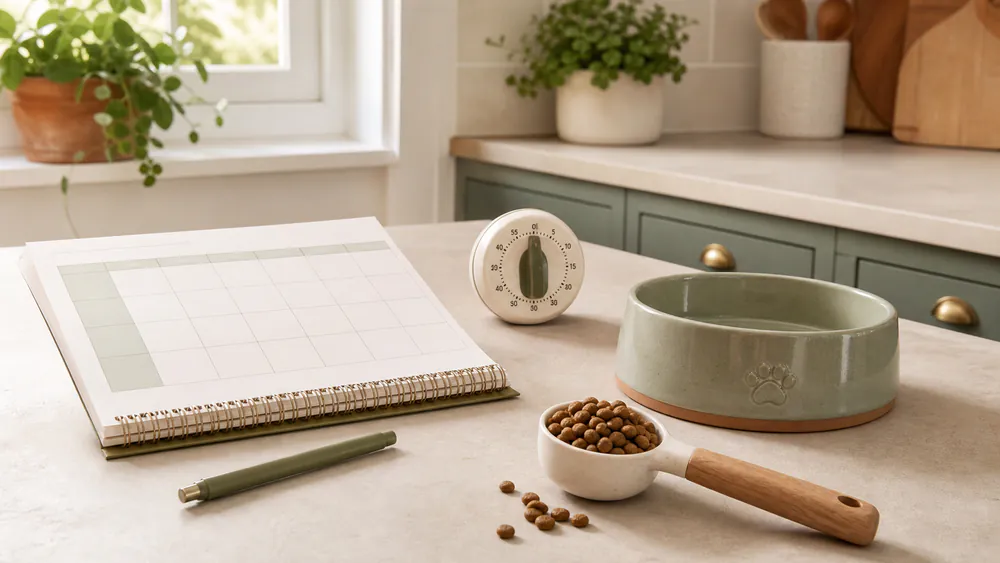
It can help to decide on one reliable measuring method and keep it consistent. If guidance is given by weight, use a scale where practical. If a scoop is supplied, make sure everyone who feeds the dog understands which scoop and level measure is being used.
Review the full routine, not just one meal
A feeding plan is easier to understand when all routine food is visible. Ask simple questions: Are treats used during training? Are chews offered regularly? Does more than one person feed the dog? Is another food being mixed into meals? These details do not mean that a routine is wrong; they simply provide useful context when reviewing portions.
A practical weekly check
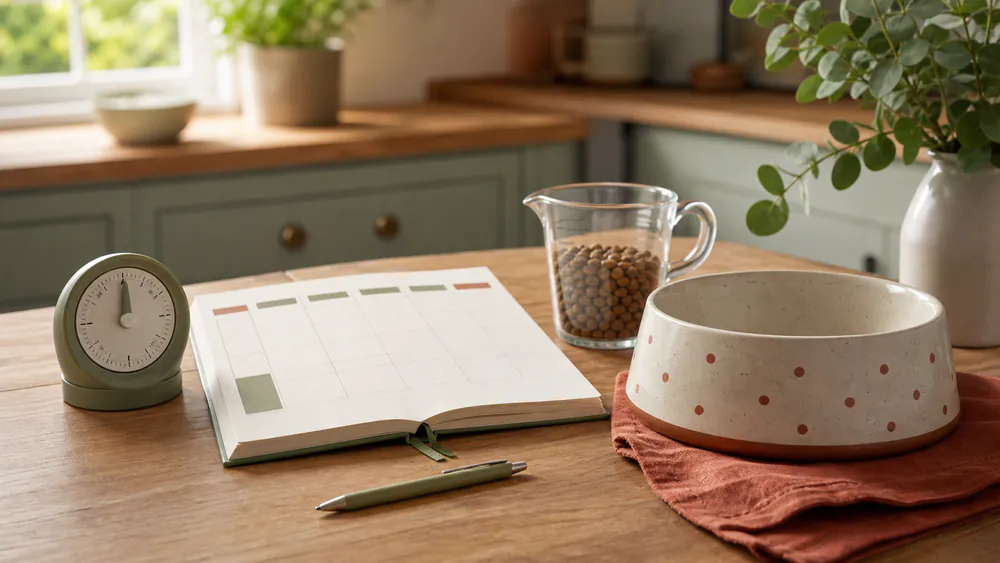
Once a week, check whether the food supply, meal preparation and treat routine still match what was planned. This is a good time to notice changes in activity, travel or household schedule that may have affected consistency. Write down factual observations rather than trying to make a health judgement from a single day.
Make the packet guide useful
Provider guidance is most useful when it is treated as a starting point for the exact recipe, life stage and body size listed on that product. It is not a replacement for looking at the whole routine. If the household changes food format, moves from one recipe to another or begins mixing foods, return to the current instructions for each item rather than carrying an old portion forward.
It can help to record the date a bag, box or recipe changes. That simple note gives a clearer timeline if a routine later needs to be reviewed. It also prevents a well-meaning family member from using a measuring scoop that belonged to a different food.
Set up a portioning station
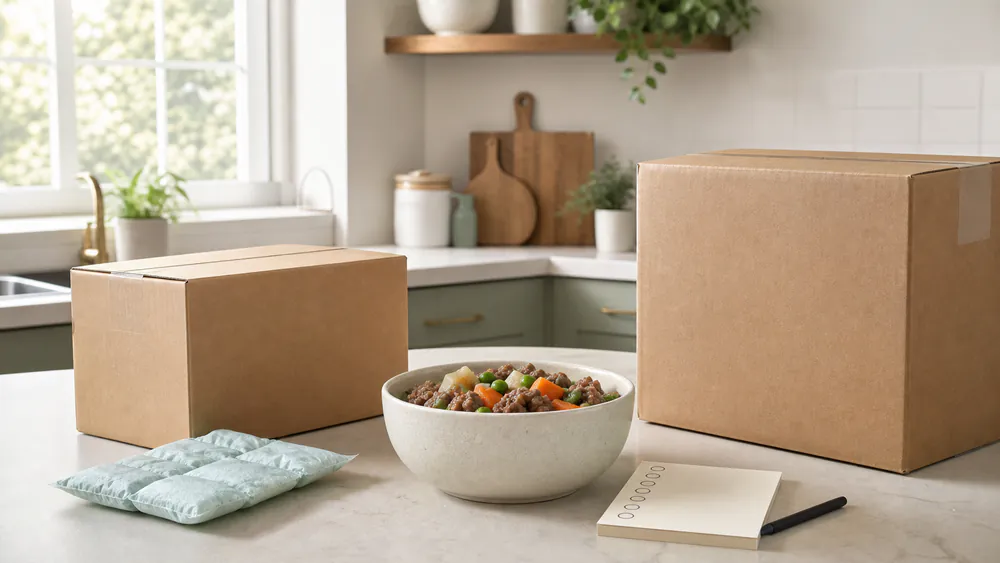
A low-effort system is more likely to survive busy days. Keep the scale or approved scoop where meals are prepared, and store the current feeding guidance with it. For prepared meals, label the next day's portions in a way that makes the serving order clear. For dry food, use one consistent container and avoid topping it up before the previous food has been used, so the food and its label do not become separated.
This is not about making feeding overly technical. It is about reducing avoidable variation: a different scoop, an uncertain meal, or a second person adding food because they did not know a meal was already served.
Questions to ask before changing a portion
Before adjusting a routine, check the simple practical details first:
- Is the product guidance for the current food and current life stage?
- Have treats, chews, toppers or table food changed recently?
- Has more than one person been feeding meals or rewards?
- Has the dog's activity or daily routine changed in a way that needs individual advice?
Those questions do not produce a universal serving amount. They make sure that a decision is based on the real routine, not on an incomplete memory of it.
Review with individual support when needed
If you are concerned about appetite, weight, growth or an existing condition, seek personalised advice from an appropriate qualified professional. General feeding charts cannot account for every dog.
FAQ
Common questions
Is this guide personalised feeding advice?
No. It is general information to help you consider questions and options. A qualified professional can advise on individual needs.
Should I check current product details?
Yes. Ingredients, recipes, delivery areas and provider terms can change, so check the provider’s latest information before deciding.