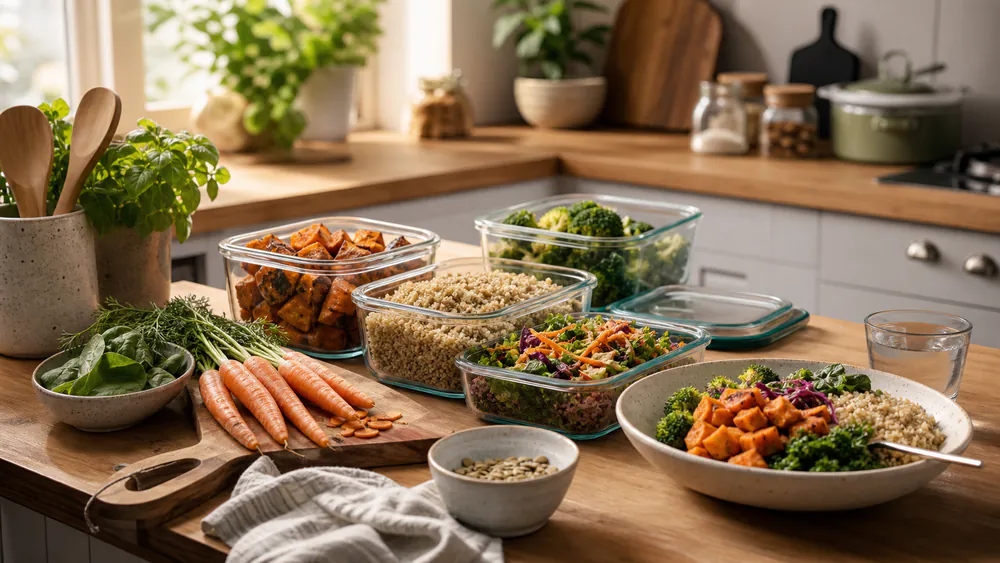
Keep the plan realistic
Busy weeks rarely benefit from an overly strict meal plan. Start with a small number of dependable meals, useful cupboard basics and a realistic view of the evenings when time is shortest.
Make shopping decisions once
A short list built around planned meals can reduce repeat decisions. Include flexible ingredients that can be used in more than one way, and leave room for leftovers or a changed schedule.
Avoid all-or-nothing thinking
Everyday eating does not need to look identical from one day to the next. A practical routine is one that accommodates work, family commitments, budget and personal preferences without relying on guilt or unrealistic rules.
Use a flexible base list
A small base list can make a plan easier to adjust. Choose ingredients that can appear in more than one meal and add a few options that keep well for the days when plans change. The aim is not to create a perfect shopping basket; it is to reduce the number of last-minute decisions during a busy week.
It can help to keep a note of meals that worked well for the household. Over time, that becomes a practical personal reference rather than a strict menu. Allowing for convenience meals, leftovers and changed plans is part of a sustainable routine.
Get individual support when needed
This article is general information. Individual dietary, medical or allergy-related questions should be discussed with an appropriate qualified professional.
Plan for the difficult evenings first
The most useful plan is usually built around the days when energy and time are lowest. Choose one or two meals that can be prepared with familiar ingredients, a straightforward backup that does not require a last-minute shop, and a way to use leftovers safely and promptly. This reduces pressure without pretending every evening needs the same meal.
Consider the practical limits of the kitchen as well: freezer space, lunchboxes, who is home to cook and how much washing-up is realistic. A plan that relies on elaborate preparation is less likely to last than one that respects the household's actual capacity.
Share the decisions
If several people shop or cook, agree a simple way to communicate what has already been bought and what is planned. A shared list, a note on the fridge or a short weekly check-in can prevent duplicate purchases and make it clearer when a meal can be moved to another day.
It is reasonable to include convenience food, takeaway nights or repeat meals in the plan. Those are often the options that keep a busy week workable. The goal is to make choices easier, not to create a standard that makes everyday eating feel like a test.
Review what worked, not just what went wrong
At the end of a week, note one meal that was easy to repeat and one ingredient that created waste. Small adjustments to the next list are usually more useful than a complete reset. Over time, the household builds a realistic collection of meals, snacks and shopping habits that suit its own schedule and budget.
FAQ
Common questions
How should I use this guide?
Use it as a practical starting point, then check current provider or product information before making a decision.
Are the recommendations paid for?
Commercial relationships do not determine our editorial conclusions. Where affiliate links are used, we label them clearly.